
********************
 Luke 10, 29: “And who is my neighbor?”
JPIC Resource Bulletin Immigration 01/15/2026:
Answering the Call:
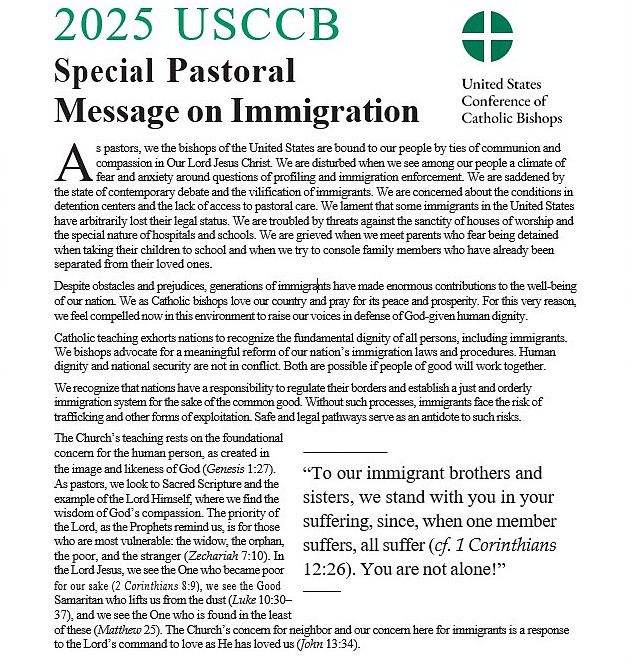
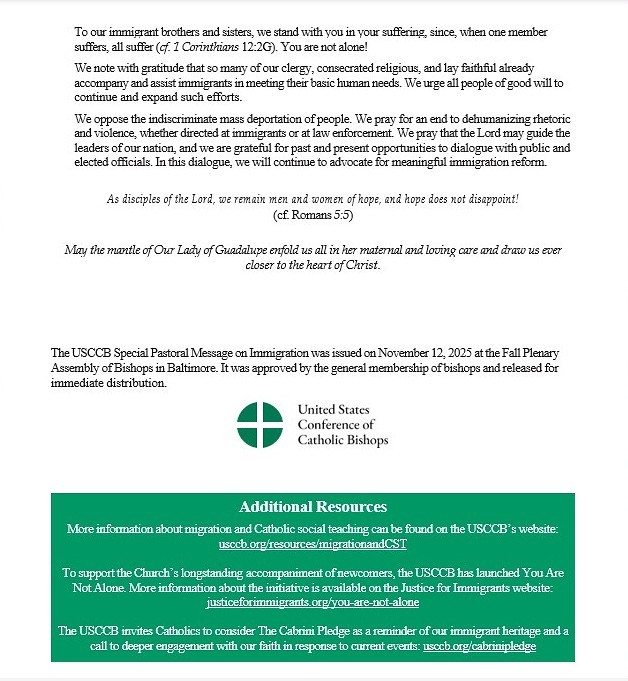
In response to the growing distress in our immigrant communities from the mass deportation program, there were two important developments in the US Church and the OFS toward the end of 2025. The USCCB’s Special Message on immigration from 11/12 is a milestone for catholic unity. It calls the whole Church to act in support of immigrants.
In support of the Bishops, the OFS national fraternity approved, in a near unanimous vote, a Call to Franciscan Accompaniment on 12/11. It calls all OFS in the country to be present in this moment.
Both of these documents are products of sincere and difficult dialogue. Both are subject to an acknowledged charge that they are insufficient. To have an effect, statements must be honored by visible actions. So please let everyone know. Every secular should read both of these and every fraternity should be discussing them. We are being asked to stand up and be counted.
The US Church has been in the forefront on this issue for decades, always supporting comprehensive immigration reform. Today, the call is stronger than ever. It is important to be familiar with the initiatives of the Church. The USCCB website is a comprehensive resource. You can sign up for alerts to track legislation. You can link to Catholic Charities in every state. Their initiative, Justice for Immigrants, is a good place to start. Also, “You are not alone” is a resource for a variety of actions that Catholics can get involved in. (Spanish version)
A message from Brother David Buer, OFM, Spiritual Assistant to the national JPIC Commission:
“Dear Secular Franciscans,
We live in an era of Nation States and many of our brothers and sisters, through no fault of their own, are forced to flee from their homeland to another country. Our past few Popes have written sympathetic letters to the faithful urging a compassionate response to their plight. … Pope John Paul II preached about immigration in his 1979 outdoor mass in Chicago’s Grant Park along Lake Michigan. (I know because I was there.) And Pope Francis was outspoken on immigration from the beginning of his papacy. Pope Leo is continuing that legacy. Let’s do what we can, where we are. I’m in process of signing up with the Archdiocese of St. Louis to accompany migrants around the courthouse downtown. Blessings, David Buer, OFM, ”
Secular Franciscans have reported to the national council that they are responding, in San Francisco, in Los Angeles, In Arizona and New Mexico, in Iowa and Chicago, in St Louis, in Erie, PA. They join people of other faiths and walks of life by attending court proceedings, to be witnesses and to assist when possible. Others are bringing necessities to those afraid to go out. Let us all join this collective response. The JPIC office of the Our Lady of Guadalupe Province, OFM, has a list of suggested actions (attached, and at this link.)
Suggested activity for Permanent (ongoing) formation:
Article 44 of our General Constitutions says we should be: “reflecting on events in the Church and in society in the light of faith and with the help of the documents of the Magisterium [Catholic Social Teaching] consequently taking consistent positions” Exercise: If there is not a local situation, adapt one of the stories from the Kino Border Initiative (of a migrant experience.) Example: How do I Start Over? and share it with the fraternity in discussion groups. Look at the case with the eyes of Scripture and Catholic Social Teaching, and ask the members to arrive at a “consistent position.” Conclude with prayers for the person.
Through the intersession of Our Lady of Guadalupe,
May our actions be visible, our voices heard,
And our hearts made whole in the love of the risen Christ. Amen.
Joe Makley, OFS joe.makley@pioneerstreet.com
********************
********************
 THE NATIONAL FRATERNITY of the SECULAR FRANCISCAN ORDER – USA
Call to Franciscan Accompaniment December 11, 2025
Fellow Secular Franciscans,
In solidarity with Pope Leo XIV, our bishops, and all the Church, Secular Franciscans are called to be present in society in this moment. We’ve heard from seculars across the country about their distressing experiences, including members who are US citizens carrying their passports with them and refraining from speaking Spanish in public. Fraternity members have stopped attending regional gatherings. Others are afraid to go to church or their court appointments, or even to leave their homes. These are firsthand accounts.
The Church’s response can be read in the US Bishops’ “special message,1” of November 12, containing statements of grief, lamentation, disappointment, and concern, but also encouragement, hope, and prayer. Striving for peace regarding this delicate situation, the bishops “pray for an end to dehumanizing rhetoric and violence, whether directed at immigrants or at law enforcement,” and they insist that “Human dignity and national security are not in conflict. Both are possible if people of good will work together.”
Our Rule (Article 15) challenges us to act courageously for justice. At the same time, we must be bearers of peace and seek out ways of unity and fraternal harmony through dialogue (Article 19). OFS members have reported that they are answering this challenge in many regions, with courtroom or legal assistance, education, family support, donations, food drives, etc. A JPIC-based process at the fraternity level would be to assess local needs, and identify a gap that the members can fill as an apostolate. The JPIC office of the OFM province, Our Lady of Guadalupe, has a list of suggested activities.
Also, the USCCB has been very clear in asking for support from lay Catholics for Comprehensive Immigration Reform. Catholic elements of reform are listed here. Most urgently, the right to due process must be reestablished. Suspending this fundamental right (which also exists in canon law) is a grave threat to justice, and to human dignity.2 “Apparent ethnicity” can legally be one “relevant factor” for immigration stops,3 but according to our catechism, this is unjust.4 Advocating for the poor, the maligned and marginalized, is holy, prophetic work. The USCCB offers resources to develop Christ-centered policy in support of immigrants. Please join us in prayer for hearts to be changed for a greater dialogue for a long-term solution.
Prayer:
To the God of our ancestors, who freed the Israelites,
Give us the grace to assist our brothers and sisters from other lands
And follow your command to welcome the stranger
With actions that are peaceful, loving, and visible.
We ask this in the name of your only Son Jesus, who lived as a migrant in Egypt and who, when reading
in the synagogue, announced the freedom of the captives.
Amen
In Christ’s peace,
The National Fraternity Council of the Secular Franciscan Order USA
Go forth as witnesses… proclaiming Christ by our Life and our Words. (OFS Rule Article 6)
_____________________
1 USCCB Special Message
2 OFS General Constitutions #22, “… They should take clear positions whenever human dignity is attacked by any form of
oppression or indifference. They should offer their fraternal service to the victims of injustice.”
3 Noem v. Vasquez Perdomo:
4 Catechism of the Catholic Church, 1935
THE NATIONAL FRATERNITY of the SECULAR FRANCISCAN ORDER – USA
nec.ofs.usa@gmail.com www.SecularFranciscansUSA.org 5000 Colerain Ave., Cincinnati, OH 45223-1213
********************
Luke 10, 29: “And who is my neighbor?”
Actions of Franciscan Accompaniment:
The list below is adapted from a resource provided by the JPIC office of the OFM province, Our Lady of Guadalupe, which has offered assistance in hosting events. Our Regions have seen small and growing efforts at accompaniment with courtroom processes. Some OFS leaders have partnered with other groups to sign up for court attendance. This can include observation at the court, communicating with relatives, etc. Also, some members have joined the groups that are assisting immigrants with plans for family if detained, knowledge of their rights, referring legal assistance, etc. There is need for collective action by fraternities in the form of apostolates, but there is also need for individuals to “do what you can, where you are.”
May God grant success to the work of our hands, done in the name of Jesus, who gave us our instructions in Matthew 25:31” For I was hungry and you gave me something to eat, I was thirsty and you gave me something to drink, I was a stranger and you invited me in, 36 I needed clothes and you clothed me, I was sick and you looked after me, I was in prison and you came to visit me.”
Categories of suggested actions:
- Address direct needs
o Offer spiritual and pastoral support, as well as financial support.
o Assist those who are shut in (shopping, etc.)
o Assist with emergency plans
o Offer sanctuary when legal - Offer legal resources and support (Do not offer legal advice unless you are a lawyer.)
-
-
- Provide “Know your rights” training
- Accompany people to court hearing and ICE check-ins
- Share legal connections and ask lawyers to share resources
- Register parishioners when arriving as immigrants
-
- Advocate for change
o Contact officials and leaders with letters, calls and emails
o Build collaborative relationships with leaders and officials to change policy
o Contact the USCCB - Witness on their behalf
o Prayers of the faithful
o Pray at ICE offices and detention centers
o Submit opinion editorials to media outlets
o Share stories that reveal the humanity of immigrants
Contact Joe Makley at: Joe.sfo@pioneerstreet.com
********************
 United States Department of Office of usccb.org/migrationpolicy
Conference of Migration and Policy and
Catholic Bishops Refugee Services Advocacy
_________________________________________________________________________________________________
JANUARY 2025
Catholic Elements of Immigration Reform
____________________________________________________________________
“What is clearly true, and what the Church and many others have called for, is the urgent need for a comprehensive reform of our country’s immigration system. The U.S. immigration system is overly complex and unjust, often keeping family members apart; it must be fixed.”
—Statement of the USCCB Administrative Committee (March 17, 2022)
For decades, the Catholic bishops of the United States have been consistent and steadfast in their calls for a just reform of the nation’s immigration system. The elements of reform articulated below are grounded in Catholic social teaching generally and the Church’s teaching on migration specifically, including the joint pastoral letter released by the American and Mexican bishops, Strangers No Longer: Together on the Journey of Hope (2003).
Element 1: Enforcement efforts should be targeted, proportional, and humane
Safeguarding American communities and upholding the rule of law are laudable goals. At the same time, a country’s rights to regulate its borders and enforce its immigration laws must be balanced with its responsibilities to uphold the sanctity of human life, respect the God-given dignity of all persons, and enact policies that further the common good. Whether along an international border or in the interior of the country, enforcement measures should focus on those who present genuine risks and dangers to society, particularly efforts to reduce gang activity, stem the flow of drugs, and end human trafficking. Just enforcement also requires limiting the use of detention, especially for families, children, pregnant women, the sick, elderly, and disabled, given its proven harms and the pervasive lack of appropriate care in detention settings. Military personnel, resources, and tactics should not be used in immigration enforcement. Deportations and other enforcement actions should always be carried out with due regard for families, community ties, and religious liberty interests.
Element 2: Humanitarian protections and due process should be ensured
From refugee resettlement, asylum, and temporary protected status, to visas for victims of trafficking and abused youth, humanitarian protections are essential components of an immigration system that furthers the common good. Reforms to the U.S. asylum system in particular should not raise what is already a high bar for relief, given the potential threats to human life if refoulement were to occur. Meanwhile, third-country resettlement is a durable and mutually beneficial solution for refugees who cannot safely return to their country of origin. Immigration processes, whether affirmative or defensive, must also be subject to due process. The dehumanization or vilification of noncitizens as a means to deprive them of protection under the law is not only contrary to the rule of law but an affront to God himself, who has created them in his own image. Further restricting access to humanitarian protections will only endanger those who are most vulnerable and deserving of relief.
Element 3: Long-time residents should have an earned pathway to citizenship
History does not support the belief that opportunities for long-time undocumented residents to regularize their status significantly increases illegal immigration. Today, nearly 12 million people are estimated to be living in the United States without legal status. This number has remained between 10 and 12 million since 2005. Almost one-third of the undocumented population consists of those brought to the United States as children, commonly known as “Dreamers”. It also includes approximately 300,000 farmworkers, about half of the U.S. agricultural workforce. A significant majority of the undocumented population has lived in the United States for over a decade (some estimates place this percentage at upwards of 80%). Meanwhile, the population already contributes an estimated $100 billion in federal, state, and local taxes each year. Providing legal processes for long-time residents and other undocumented immigrants to regularize their status would strengthen the American economy, provide stability to communities, and keep families together.
Element 4: Family unity should remain a cornerstone of the U.S. system
Catholic teaching maintains that families are the foundation of society, and the success of any civilization hinges on the well-being of its families. For generations, families living in the United States have included combinations of citizens and noncitizens. Immigration reform measures should be evaluated according to whether they strengthen families and promote family unity. U.S. citizen members of mixed-status families should not be penalized with restrictive policies that require eligibility for programs or services to hinge on an entire family being comprised of citizens.
Element 5: Legal pathways should be expanded, reliable, and efficient
An enforcement-only approach to immigration disregards the benefits of immigration and the contributions of immigrants, as well as the many legitimate motivations people have for migrating, including family reunification, educational opportunities, employment, and humanitarian needs. Meanwhile, limits on legal immigration pathways established several decades ago are no longer responsive to the social, economic, and geopolitical realities of today. Unreliable processes and inadequate legal pathways have merely contributed to an increase in irregular migration, even as enforcement efforts have been steadily intensified. Improving and increasing opportunities for people to lawfully enter the United States, on both a temporary and permanent basis, are necessary steps to address several pressing issues, from family separation to regional labor shortages. New legal pathways should be created, and backlogs resulting in decades-long wait times should be eliminated.
Element 6: The root causes of forced migration should be addressed
Migration has been a consistent phenomenon throughout human history. The Bible itself depicts a series of migrations, including that of the Holy Family fleeing persecution. An effective and sustainable response to increased migration must include efforts to address its root causes, especially in the case of forced migration. The preeminent right to life provides that people should be able to flourish in their homeland, with migration being a free choice (known in Catholic teaching as the right not to migrate). However, when the conditions for a dignified life are absent, people have the natural right to migrate, and countries have a duty to accommodate that right to the extent possible. There are a multitude of factors causing people around the world to migrate in large numbers today, often as the only way to sustain or protect human life. This cannot be addressed unilaterally (i.e., a domestic overemphasis on deterrence) or by shifting responsibility (i.e., externalization of borders) but requires meaningful cooperation between the United States and other countries.
********************
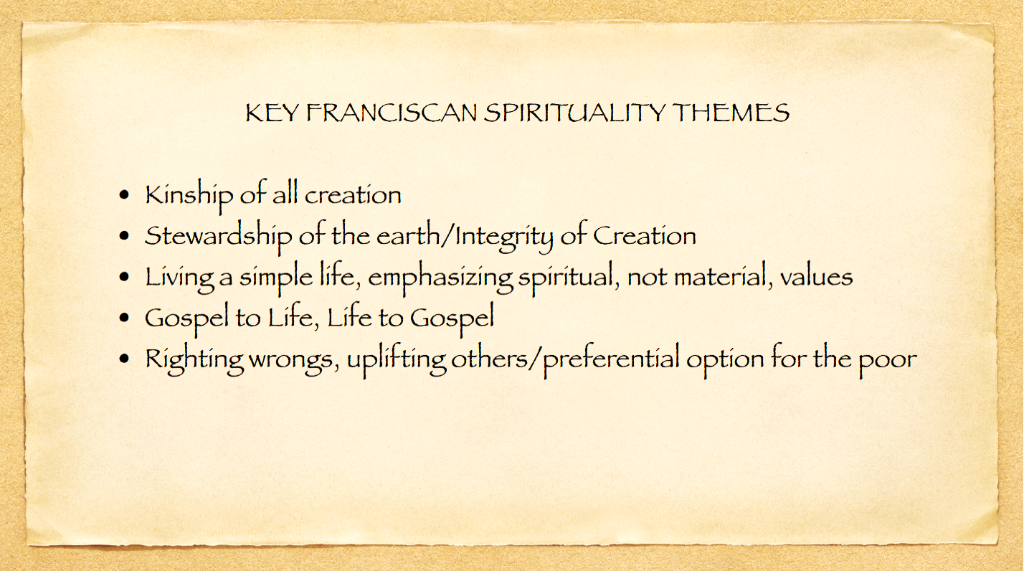

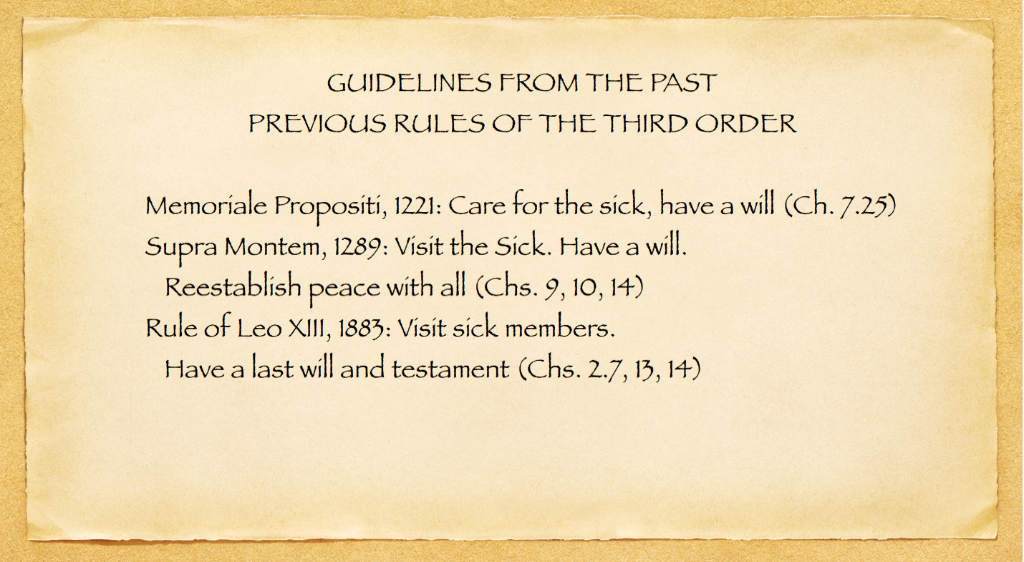
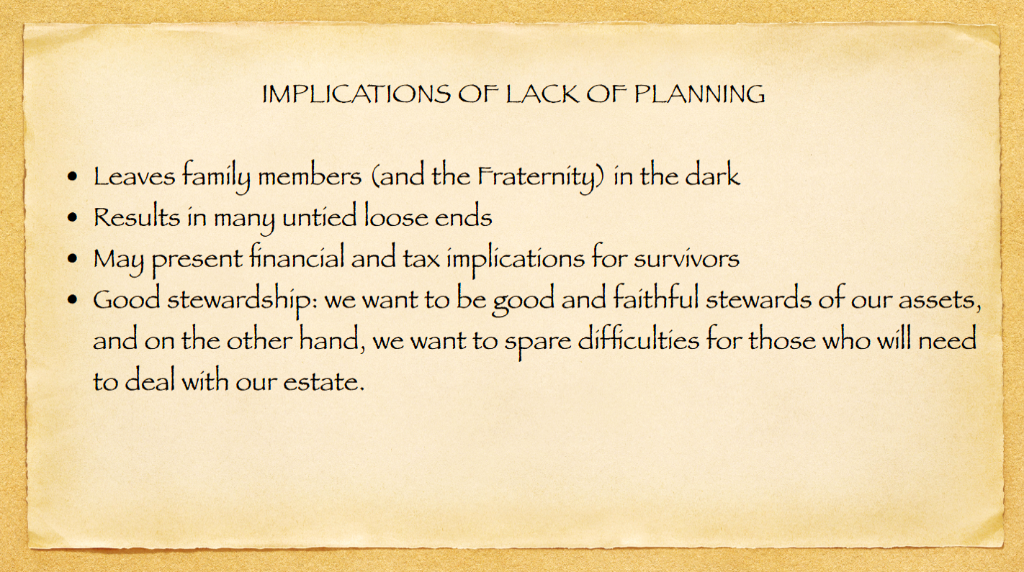


Wake and Burial Wishes Form
********************
Laudato Si Action Platform and Handout
********************
Laudato Si Resource Handout
********************
Franciscan Season of Caring for Creation
********************
WORLD ENVIRONMENT DAY 2023
********************
2021 Care for Creation
(Click on Icon below to view)

********************
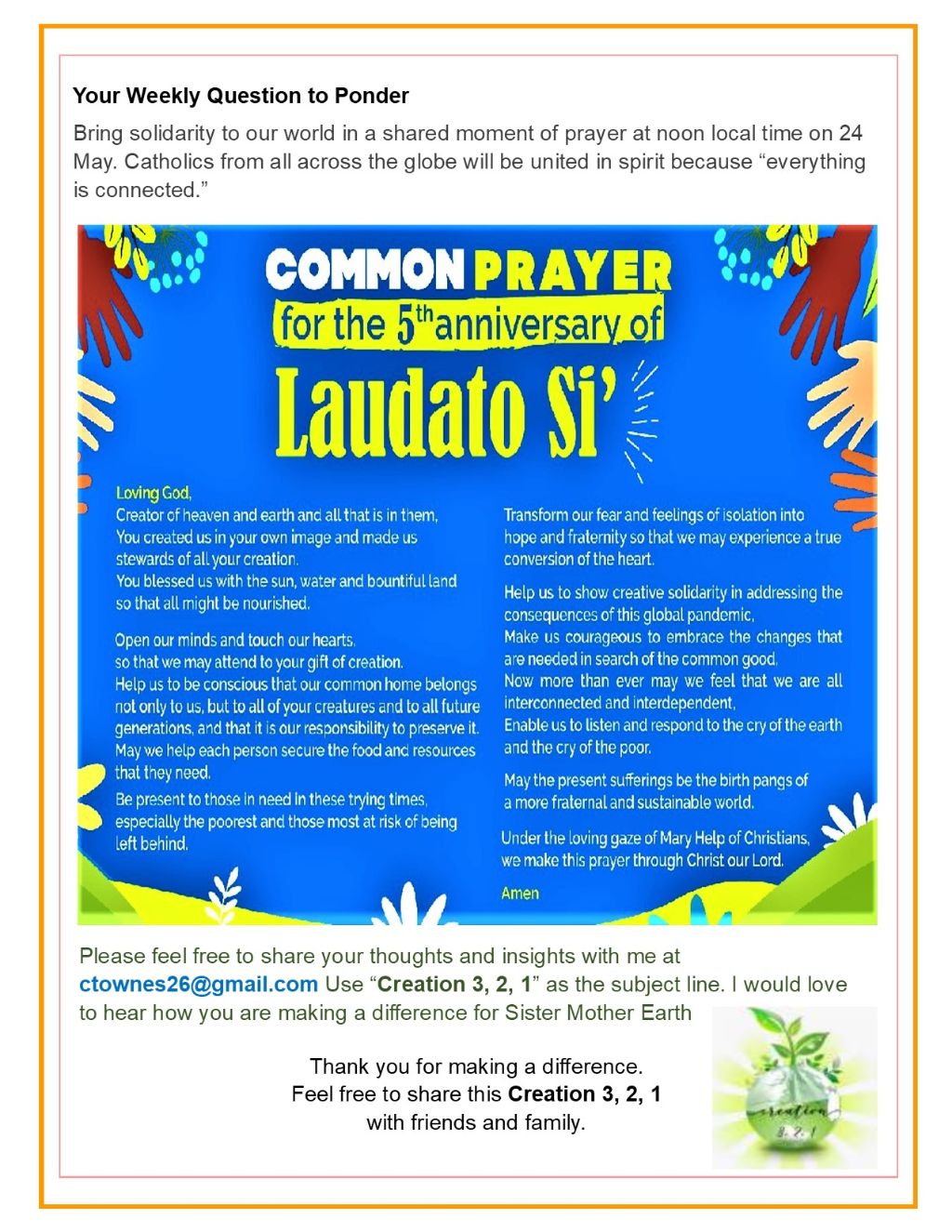
Creation 321-2 May 6
A message from our National JPIC Coordinator Carolyn Townes on the topic, Care of Creation. Carolyn includes prayers as well as actions to take to further our common concern for stewardship of God-given creation.
(Click on picture below to download document)

Message of the Holy Father Francis for the Event “Economy of Francesco”
(Assisi, 26 to 28 March 2020)
**************************************************
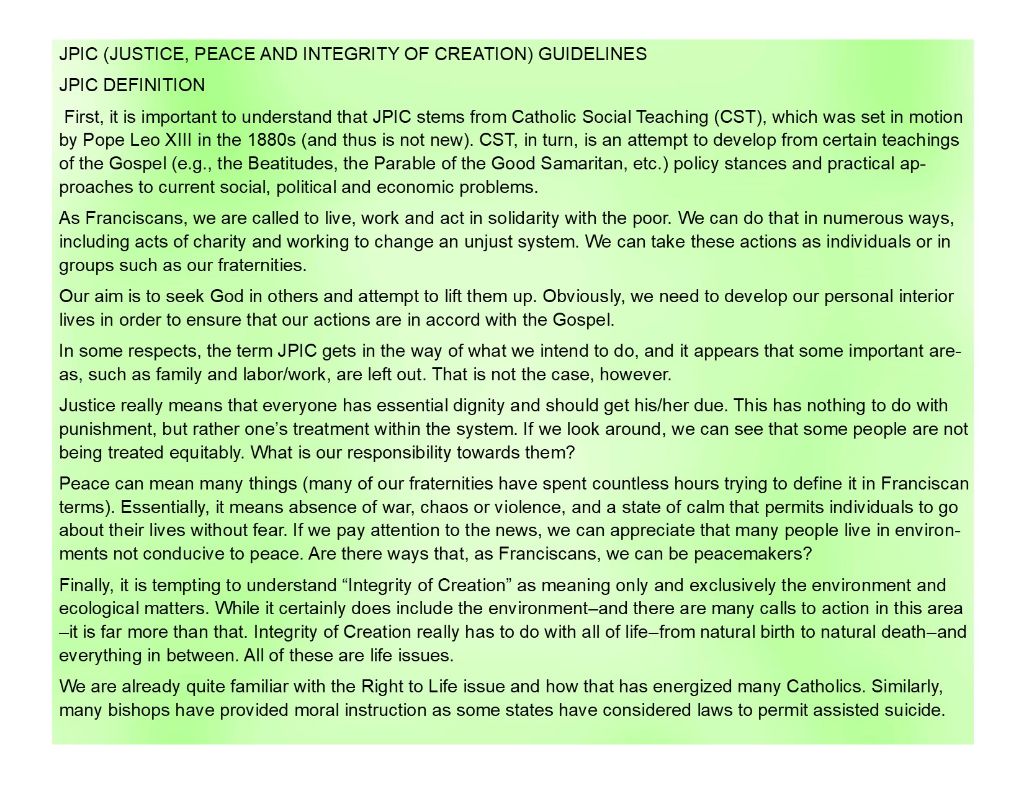
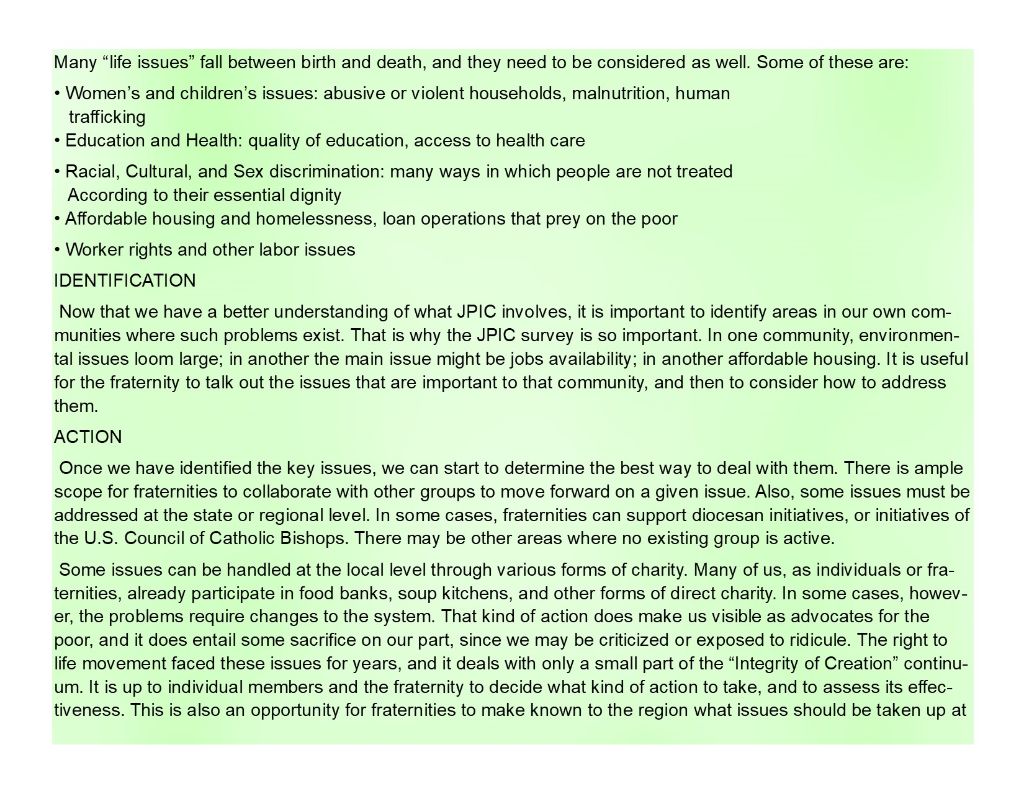
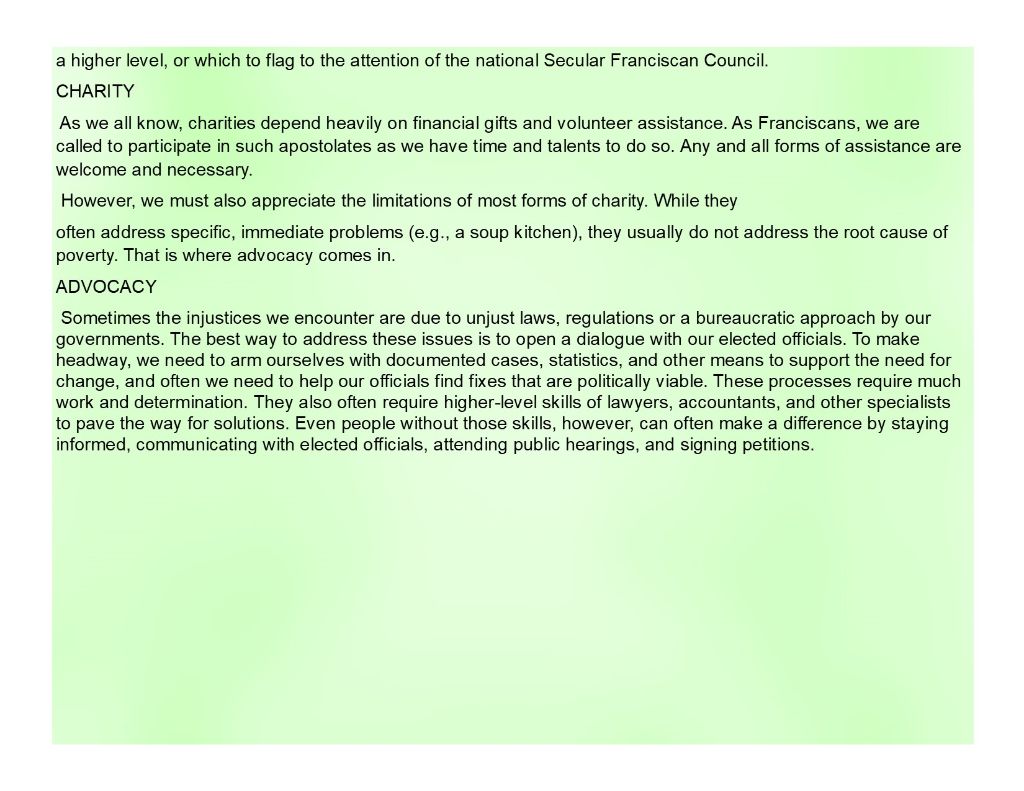
JPIC (JUSTICE, PEACE AND INTEGRITY OF CREATION) GUIDELINES
**************************************************
JPIC Guidelines -September 2019 Printable Copy
**************************************************
Social Media